It is 8 p.m., you just got home, and the only time you have in your daily routine to exercise is right before bed. If you have ever laced up your sneakers for an evening workout and wondered if you just sabotaged your sleep, you are not alone. For years, the advice was simple: never work out at night, or you will pay for it later. Evening workouts got a bad reputation long before sleep research had the tools to actually test that claim.
This article breaks down what happens in your body when you exercise before bed, who needs to be more careful than others, the best types of evening exercise for sleep quality, and how to build a relaxing bedtime routine. By the end, you will have a clear, practical plan instead of a vague worry about exercising at night.
For most healthy adults, working out before bed is not the sleep-wrecking habit it is often made out to be. A meta-analysis in Sleep Medicine Reviews found that evening high-intensity exercise, compared with no exercise, does not disrupt nighttime sleep in healthy adults who are already good sleepers. That single finding flips a lot of conventional wisdom on its head.
A separate meta-analysis of randomized controlled trials published in Frontiers in Psychiatry examined how regular exercise affects self-reported and physiological sleep quality in adults. The overall message was encouraging: physical activity tends to support sleep health rather than harm it. Regular physical activity has been linked to better sleep outcomes, including improved sleep quality, more deep sleep, and less daytime tiredness, according to Dr. Aarthi Ram, a neurologist specializing in sleep medicine at Houston Methodist.
That said, sleep research is still catching up to all the specifics. One systematic review and network meta-analysis published in the Nature and Science of Sleep journal noted that the effects of different intensities of evening exercise on sleep in healthy adults remain somewhat contradictory across studies. This is exactly why this article digs into intensity and timing rather than treating "exercise before bed" as one single thing.
The old blanket warning came from real concerns, just overextended. Early researchers noticed that a late-night cycling session could temporarily delay the body's release of melatonin, the hormone that helps regulate your sleep-wake cycle. They worried this could impair sleep for anyone who trained late.
That single data point got generalized into "never exercise at night," even though it specifically involved a vigorous workout very close to bedtime. Night owls who naturally prefer training later in the day got swept up in advice that was really meant for one specific scenario.
Modern sports medicine takes a more precise view. The type of exercise and how much time you leave before lights-out all matter more than simply whether the clock says it is evening, and a restful sleep is still very achievable for people who exercise at night.

(Image by Puhhha from Getty Images via Canva)
To understand why evening exercise affects people so differently, it helps to look at three systems your body relies on to fall asleep: temperature, stress hormones, and your internal clock.
Intense exercise raises your core temperature and keeps your heart rate elevated for hours afterward. This is why a tough workout right before bed can make it harder to fall asleep if you do not give your body time to cool down first.
High-intensity exercise increases stress hormones like cortisol and adrenaline, and doing it too close to bedtime can leave you feeling wired instead of relaxed. This is a completely normal, healthy response to physical exertion, not a sign that something is wrong with your body.
Interestingly, the picture is not all bad. While intense exercise causes a short-term spike in cortisol and adrenaline, these stress hormones typically return to your normal baseline within a few hours as your body recovers. Exercise is also linked to the release of endorphins, which can reduce stress and improve mood. It can also reduce stress over time and is associated with a reduced risk of conditions, such as heart disease.
Beyond temperature and hormones, exercise also appears to improve sleep quality at a deeper, structural level. Moderate aerobic exercise increases the amount of slow-wave sleep you get. According to Johns Hopkins Medicine's patient education materials on the stages of sleep, slow-wave sleep is the deep sleep stage where your brain and body do most of their overnight repair work.
Researchers studying how exercise can improve sleep have also found that it may reduce inflammation and support healthier heart rate variability overnight. At the same time, some people may notice that exercising close to bedtime seems to keep them up at night rather than help them feel sleepy on schedule, which is part of the normal variation in how individual nervous systems respond to evening activity.
Your circadian rhythm is your body's internal 24-hour clock, and it governs far more than just sleep, touching various aspects of health, including metabolism, mood, and body temperature regulation. A review published in the National Library of Medicine via PubMed) from a landmark meta-analysis in Sports Medicine concluded that evening exercise does not negatively affect sleep. However, sleep markers could only be slightly impaired if vigorous exercise ends less than one hour before bedtime.
The keyword here is "slight." This effect is more pronounced with vigorous, very late exercise than with lighter movement earlier in the evening, and it has been studied in both healthy males and females across different age groups.
Joint pain or general discomfort can also factor in here. If you experience pain during or in the few hours after a workout, that physical discomfort alone can interfere with relaxation at bedtime, separate from any hormonal effect.
Most research suggests that elevated heart rate, body temperature, and stress hormones from a vigorous workout typically take roughly one to two hours to settle down. That settling window is the real reason timing matters more than the simple fact that you exercised at night.
The question of whether a workout at night affects sleep for better or worse really comes down to who you are, since working out before bed does not affect everyone the same way. That variation is backed by research, not just anecdote. In several studies, evening exercise compared favorably with no exercise at all, but individual results still varied. Some people sleep just as well, or better, after an evening session. Others notice a real difference.
If any of these sound familiar, you might want to pay closer attention to your timing:
On the other hand, plenty of people fall into this category:
People managing certain sleep disorders, joint pain, or restless legs syndrome may want to lean toward morning exercise or lighter evening sessions, since their nervous systems may respond differently to stimulation close to bedtime.

(Image by Helgy on Canva)
Not all workouts are equal when it comes to your wind-down routine. Here is how common types of exercise stack up.
These activities promote relaxation rather than stimulation, so they are generally safe close to lights-out:
A 2021 randomized crossover study in Scientific Reports found that 60 minutes of vigorous exercise increased core body temperature and energy expenditure during the subsequent sleep. This is a reminder that how your body reacts to a workout can show up hours later, even after you feel recovered.
Moderate intensity exercise performed in the early evening generally gives your body enough runway to settle before bed:
A 2022 network meta-analysis published in the journal Nature and Science of Sleep found that an acute evening high-intensity exercise session decreased rapid eye movement sleep by about 1.95 percent compared with not exercising. However, it did not significantly affect other sleep measures.
Save the following for at least two to three hours before bed if you are sensitive to night workouts:
| Exercise Type | Recommended Buffer Before Bed | Why |
| Yoga, walking, light stretching | None needed | Promotes relaxation, minimal effect on body temperature |
| Moderate cardio, strength training | 1 to 2 hours | Heart rate and temperature settle within this window |
| HIIT, heavy lifting, sprints | 2 to 3 hours or more | Larger spike in cortisol, adrenaline, and core body temperature |
Once you know your sensitivity level, timing becomes the practical tool that makes evening exercise work for you instead of against you.
A good rule of thumb: the more vigorous the exercise, the more buffer time you need before bed. Finish high-intensity exercise at least one to two hours before you plan to sleep. Lighter movement can happen much closer to bedtime without issue.

(Image by TrueCreatives on Canva)
A short, intentional cooldown routine can make a real difference in how quickly you fall asleep:
Because research shows real individual variation, the most useful thing you can do is run your own simple test. Exercise at your usual evening time for one week and jot down how quickly you fall asleep and how rested you feel each morning. If you notice restless nights, shift your workout 30 to 60 minutes earlier and compare. Your own data will tell you more than any general guideline could.
Your body needs to lower its temperature to fall asleep, and an evening workout temporarily raises it. The workout side is only half the picture. What you sleep in and under plays a real role in how quickly that cooldown happens once you get into bed.
Heavy, synthetic, or poorly ventilated bedding traps body heat right when you need it to escape, which is especially noticeable on a night when your body is already working harder to cool down after exercise. Breathable cotton duvet covers and sheets made from 100 percent long-staple cotton can improve airflow around your body and help you stay comfortable after an evening workout. Go for crisp percale weave, which stays breathable rather than locking in heat against your skin. For anyone trying to fall asleep faster after a sweaty evening session, that breathability genuinely matters. You can also opt for a silky sateen weave if you tend to get cold at night,
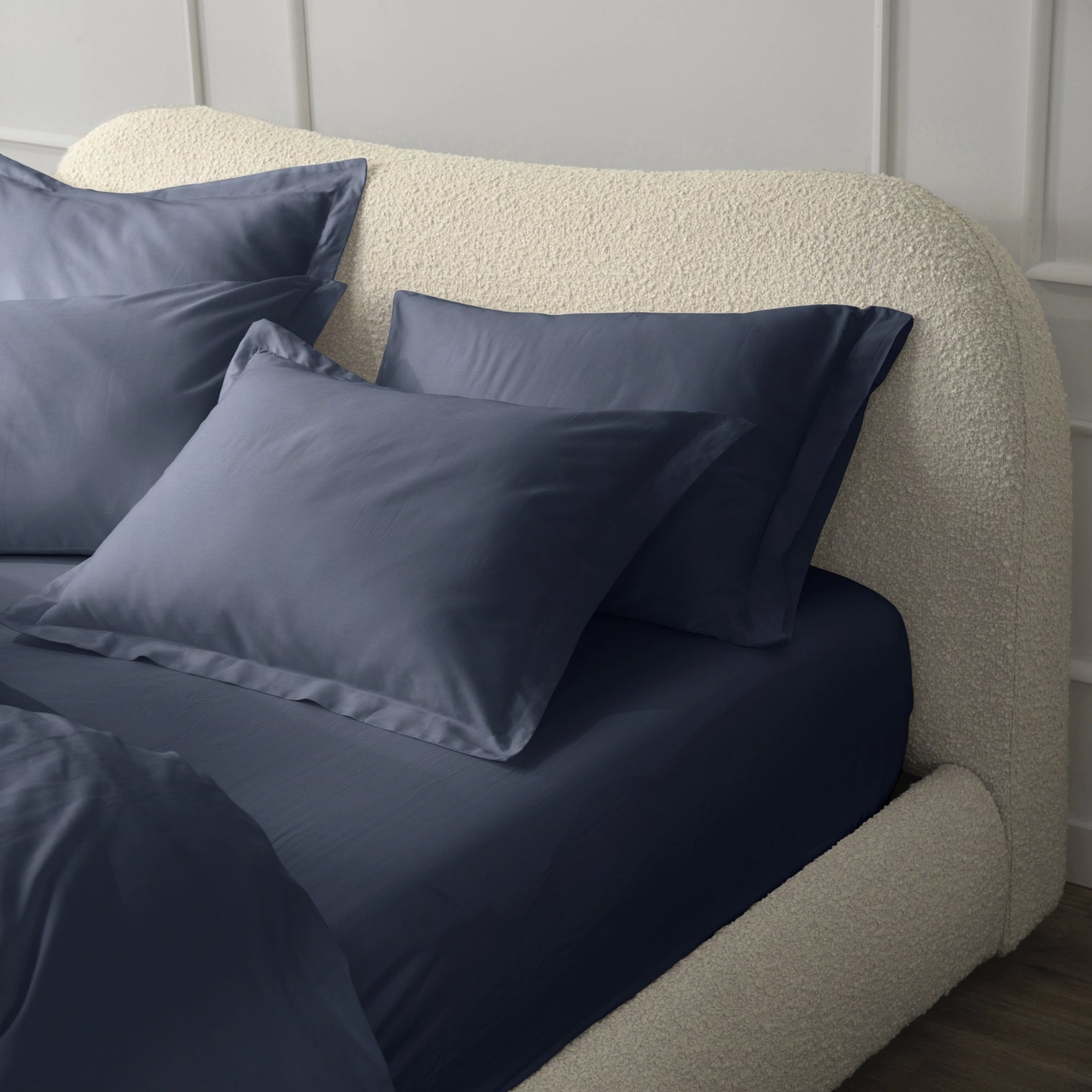
Your bed will feel like a hug for your whole body
Shop NowYour core body temperature needs to drop for sleep to kick in, and that process is already underway by the time you crawl into bed. Bedding made from breathable, natural cotton supports that drop rather than work against them. This can make the difference between tossing and turning and actually getting a good night's sleep.
It’s also important to keep your bed fresh as part of a regular exercise routine: changing the duvet cover. Choosing a three-sided opening design lets you unzip the cover like a book, lay the insert flat, and snap the corners into place — no stuffing, fluffing, shaking, or shoving required. For more tips on streamlining the process, check out these genius duvet hacks for easy changes.
If you are washing sheets more often because you train in the evenings, that quick-change system makes laundry day a breeze.
Even people who handle evening exercise well can undercut their sleep quality with a few avoidable habits.
Not universally. Research on healthy adult good sleepers found that evening high-intensity exercise did not disrupt subsequent nighttime sleep compared with no exercise. The real risk is vigorous workouts with zero buffer time, which can leave heart rate and body temperature elevated as you try to fall asleep. Light to moderate exercise rarely causes problems close to bedtime.
For high-intensity exercise like HIIT or heavy lifting, finish at least one to two hours before bedtime. For moderate-intensity exercise performed earlier or later in the evening, such as walking or restorative yoga, there is generally no need for a buffer at all.
Not significantly. Sports medicine research shows little difference in calorie burn between morning and evening exercise, and consistency matters more than the time of day. Some studies suggest small differences by sex, but the effects on subsequent dietary intake and fat loss are modest.
A single evening session is unlikely to cause true insomnia, though it can occasionally cause one rough night after a vigorous, very late workout. If sleep problems persist, talk to a healthcare provider, since chronic insomnia and other sleep disorders usually have causes beyond workout timing.
Yes, for most people. Yoga is a low-intensity exercise that activates your parasympathetic nervous system, promoting relaxation rather than stimulation. That is why yoga and light stretching are among the few types of exercise experts recommend close to bedtime.
Exercise causes a short-term cortisol spike, a normal stress response that settles within roughly an hour for most healthy participants. Cortisol then tends to remain below baseline for the next 24 to 48 hours, which may contribute to feeling calmer overall.
The best time is whichever you can stick to consistently, since regular exercise drives long-term improvements in sleep quality and optimal health. If you are sensitive to evening stimulation, morning exercise with daylight exposure most directly supports your circadian rhythm.
Yes. Stepping out of a warm bath or shower helps trigger your body's natural cooldown response, supporting the core body temperature drop you need to fall asleep.
It can, particularly with vigorous exercise performed very late. Some sleep research has linked intense, late workouts to a temporary delay in melatonin release, while lighter activity earlier in the evening has little measurable effect.
Keep your meal light and avoid eating within about 45 minutes of bedtime, since digestion can interfere with sleep quality. Skip caffeine in the evening, drink water to rehydrate, and choose a small protein-forward snack over a large meal.
Working out before bed is not the sleep disaster it is sometimes made out to be. The real story is more specific: low and moderate-intensity exercise, like walking, yoga, and steady-state cardio, rarely interferes with sleep, even close to bedtime. High-intensity exercise benefits from a buffer of one to two hours so your body temperature, heart rate, and stress hormones have time to settle before you try to fall asleep. How much it affects your sleep ultimately depends on intensity, timing, and your individual response.
The most useful thing you can do is pay attention to your own body. Track how you feel after evening exercise for a week, adjust your timing if needed, and build a simple, relaxing bedtime routine around your workout rather than fighting it. And once your timing is dialed in, the rest comes down to your sleep setup.
Breathable, well-made bedding helps your body finish the cooldown your workout already started, so you can settle into a genuinely good night's sleep instead of just hoping for one.